How Technology Is Changing Trade and Manufacturing Jobs
Why automation on site is creating opportunity, not replacing skilled workers Automation and digital systems are becoming more common across manufacturing plants, warehouses, construction sites and infrastructure projects in Australia. From smart production lines and predictive maintenance systems to digital job tracking and mobile safety reporting, technology is changing how work is performed on the…

By Nicole Hart
All Blogs• Infrastructure• Manufacturing & Operations• Renewable Energy • March 4, 2026
Why automation on site is creating opportunity, not replacing skilled workers
Automation and digital systems are becoming more common across manufacturing plants, warehouses, construction sites and infrastructure projects in Australia.
From smart production lines and predictive maintenance systems to digital job tracking and mobile safety reporting, technology is changing how work is performed on the ground.
For many tradespeople and production workers, this raises a fair question:
Is technology replacing skilled workers?
The short answer is no. But it is changing expectations.
Automation Is Changing Tasks, Not Eliminating Trades
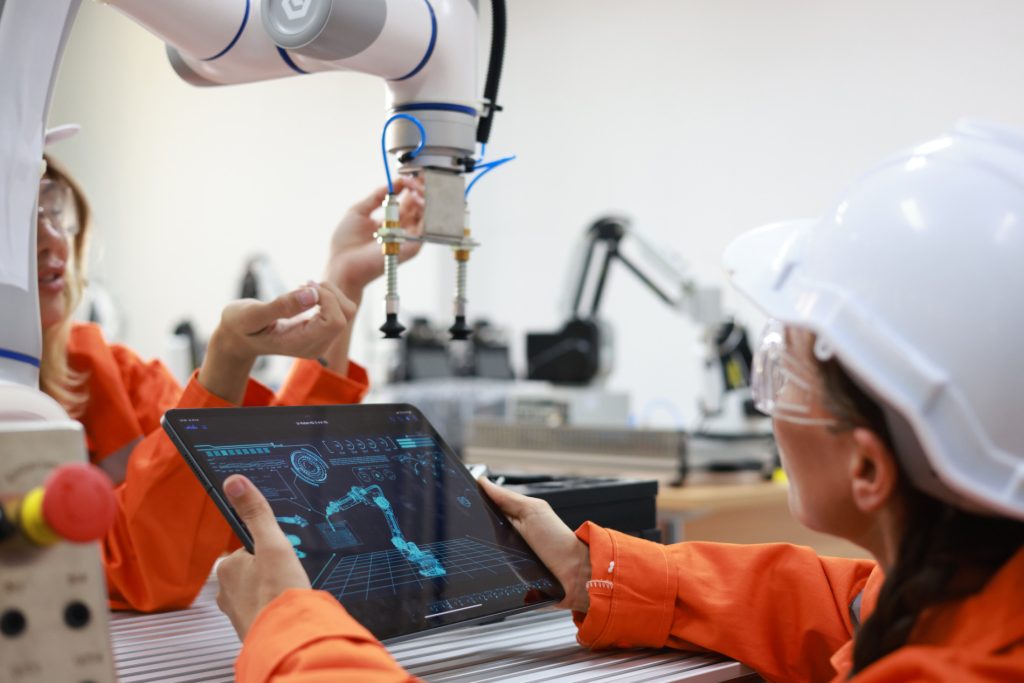
Modern manufacturing sites may now include:
- Automated production lines
- Robotics assisting with repetitive processes
- Digital quality control systems
- Maintenance dashboards predicting faults
- QR-coded safety systems and digital pre-starts
However, these systems still require:
- Skilled technicians to set up and calibrate equipment
- Electricians and fitters to fault-find and repair breakdowns
- Operators who can interpret production data
- Supervisors who understand both workflow and systems
Technology reduces repetition. It does not remove the need for mechanical skill, electrical knowledge or hands-on problem-solving.
Career takeaway: The most valuable tradespeople are those who can work alongside technology, not compete with it.
What Employers Are Now Looking For
In hiring conversations across manufacturing and infrastructure, employers consistently prioritise:
- Strong safety records
- Mechanical aptitude
- Electrical troubleshooting ability
- Experience operating modern equipment
- Basic digital confidence
- Willingness to learn new systems
You do not need to be technical in a corporate sense. But you do need to feel comfortable using:
- Digital job sheets
- Maintenance reporting systems
- Production dashboards
- Site compliance apps
Workers who resist new systems often limit their progression. Those who embrace them increase their employability.
Predictive Maintenance and Smart Systems
One of the biggest changes in manufacturing environments is predictive maintenance.
Instead of waiting for machinery to fail, many sites now use systems that:
- Monitor vibration
- Track temperature
- Analyse performance data
- Flag potential issues early
This does not remove the need for fitters or electricians. It increases demand for those who can:
- Interpret system alerts
- Diagnose issues accurately
- Prevent costly downtime
- Recommend process improvements
Career takeaway: Troubleshooting skills are becoming more valuable, not less.
Safety Is Becoming More Digital
Across industrial environments, safety systems are increasingly digitised.
You may see:
- Online inductions
- Digital incident reporting
- QR-coded equipment checks
- Electronic pre-start forms
- Real-time compliance tracking
Workers who take safety seriously and are comfortable using digital reporting tools stand out.
A strong safety record combined with adaptability to modern systems strengthens long-term job security.
Multi-Skilling Increases Job Stability
Automation can reduce the need for certain repetitive tasks. However, it increases demand for workers who can operate across multiple functions.
Employers highly value tradespeople and operators who:
- Can run different machines
- Understand both mechanical and basic electrical systems
- Assist with changeovers
- Support continuous improvement initiatives
- Step into team leadership when required
- Flexibility reduces redundancy risk.
Moving From Operator to Supervisor
Technology adoption also creates progression opportunities.
Supervisors today are expected to:
- Interpret production data
- Monitor KPIs
- Manage digital scheduling systems
- Communicate with maintenance and engineering teams
- Report performance metrics clearly
If you are looking to step off the tools and into leadership, building digital confidence now positions you strongly for future promotion.
What Has Not Changed
Despite automation, some fundamentals remain constant.
Employers continue to value:
- Reliability
- Work ethic
- Teamwork
- Safety mindset
- Practical problem-solving
- Accountability
Technology does not replace these traits. It amplifies the value of those who demonstrate them consistently.
How to Stay Competitive
If your site introduces new systems, consider:
- Asking for training rather than avoiding it
- Volunteering to trial new equipment
- Learning how production data is interpreted
- Keeping licences and tickets current
- Expanding exposure to different machines or processes
Small steps compound over time.
Adaptability is often the difference between maintaining a job and progressing into higher-paying roles.
The Bottom Line
Technology is not removing the need for skilled trades and production workers. It is raising the bar for versatility and adaptability.
Hands-on capability remains essential. Digital awareness is becoming an advantage.
The workers who stay curious, keep learning and remain open to change will continue to be in strong demand across Australia’s manufacturing and infrastructure sectors.
Considering Your Next Move?
If you are working in manufacturing, trades or infrastructure and want insight into where demand is growing, our team can help.
Fuse Recruitment specialises in connecting skilled workers with leading employers across Australia.
We understand what hiring managers prioritise and can provide guidance on how to position your experience for today’s market.
Speak with our team to explore current opportunities and strengthen your next career step.
Related Content

Driving Fuse Forward: The Women Shaping Our Business
At Fuse Recruitment, progress has always been driven by people. Behind our growth, our partnerships, and our culture are individuals who bring leadership, expertise and perspective to the business every day. This International Women’s Day, we’re recognising five women who continue to shape Fuse’s direction across marketing, leadership, recruitment and operations. From building national divisions…
How Technology Is Changing Trade and Manufacturing Jobs
Why automation on site is creating opportunity, not replacing skilled workers Automation and digital systems are becoming more common across manufacturing plants, warehouses, construction sites and infrastructure projects in Australia. From smart production lines and predictive maintenance systems to digital job tracking and mobile safety reporting, technology is changing how work is performed on the…

The Most Future-Resilient Skills Employers Are Hiring For
The capabilities that are strengthening careers across a changing workforce Artificial intelligence, automation and digital transformation are influencing almost every industry in Australia. But while technology is evolving rapidly, employer demand is becoming clearer. Across insurance, financial services, manufacturing, renewable energy, infrastructure and technology, hiring conversations consistently centre on one theme: Adaptability supported by measurable…
Related Content
Driving Fuse Forward: The Women Shaping Our Business
At Fuse Recruitment, progress has always been driven by people. Behind our growth, our partnerships, and our culture are individuals who bring leadership, expertise and perspective to the business every day. This International Women’s Day, we’re recognising five women who continue to shape Fuse’s direction across marketing, leadership, recruitment and operations. From building national divisions…
How Technology Is Changing Trade and Manufacturing Jobs
Why automation on site is creating opportunity, not replacing skilled workers Automation and digital systems are becoming more common across manufacturing plants, warehouses, construction sites and infrastructure projects in Australia. From smart production lines and predictive maintenance systems to digital job tracking and mobile safety reporting, technology is changing how work is performed on the…
The Most Future-Resilient Skills Employers Are Hiring For
The capabilities that are strengthening careers across a changing workforce Artificial intelligence, automation and digital transformation are influencing almost every industry in Australia. But while technology is evolving rapidly, employer demand is becoming clearer. Across insurance, financial services, manufacturing, renewable energy, infrastructure and technology, hiring conversations consistently centre on one theme: Adaptability supported by measurable…

How to Stay Authentic as a Job Seeker While Using AI Tools to Land a Job
Using AI tools in your job search without losing your voice or credibility A resume that sounds too perfect could cost you an interview. In today’s market, both candidates and employers are using artificial intelligence. Candidates are using tools such as ChatGPT, Microsoft Copilot, Gemini and other AI writing assistants to draft resumes, refine cover…

AI Literacy for Non-Technical Professionals
Why understanding AI matters, even if you do not work in technology Artificial intelligence is no longer limited to IT teams and data scientists. Across Australia, AI tools are influencing how reports are written, risks are assessed, schedules are managed, forecasts are generated, and hiring decisions are made. Whether you work in operations, insurance, financial…

How to Write a CV That Performs Well in AI Screening
Practical strategies to ensure your CV stands out in modern recruitment processes Artificial intelligence is now embedded in many recruitment platforms across Australia. From CV screening and skills matching to shortlisting and talent pooling, technology plays a role in identifying relevant candidates. This does not mean robots are making final hiring decisions. It means clarity,…